


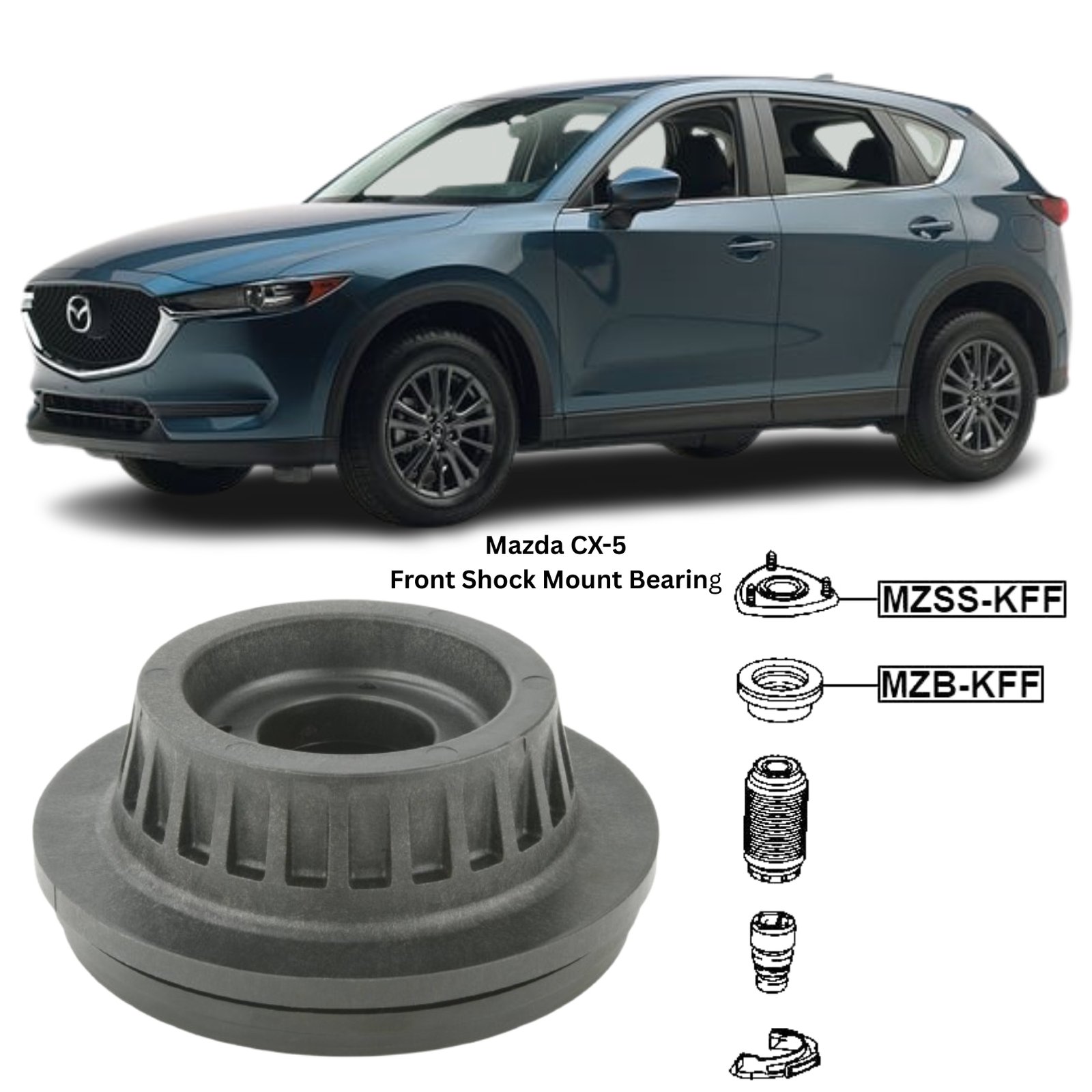

Get Mazda CX-5 2017 – Front shock Mounting MZB-KFF in Kenya
The front shock mounting, also known as the front strut mount, is a crucial structural and functional component within a vehicle’s suspension system. It acts as the upper connection point where the front shock absorber or strut assembly attaches to the vehicle’s body or chassis. Although relatively compact in size, this component carries an extraordinary amount of responsibility, serving as the key interface that supports the weight of the vehicle, cushions road impacts, stabilizes steering, and ensures driving comfort. Understanding its construction, purpose, function, and signs of wear is important for both technicians and vehicle owners who seek optimal performance and safety.
Core Purpose and Function
At its foundation, the front shock mounting performs three core tasks:
-
Structural Support:
It provides a secure mounting point for the front strut or shock absorber. Since the strut assembly includes the spring, damper, and other components, the mounting must be strong enough to withstand vertical forces from bumps, potholes, braking weight transfer, and uneven road surfaces. -
Vibration and Impact Absorption:
Most front shock mountings include a built-in rubber or elastomer insulator that absorbs and dampens vibrations before they reach the cabin. This reduces road noise, harshness, and vibration, providing smoother and more comfortable driving. -
Steering Alignment and Rotation:
For vehicles with strut-type front suspension, the mounting often houses a bearing. This bearing allows the strut assembly to rotate smoothly when steering. Without a functional mount bearing, steering becomes stiff, noisy, and inaccurate.
Construction and Materials
The front shock mounting is typically made up of several critical components, each serving a structural or cushioning function:
-
Upper Metal Plate or Housing:
This heavy-duty metal structure attaches to the vehicle chassis. Its shape varies depending on design but must withstand continuous load and stress cycles. -
Rubber Insulator or Bushing:
A thick, durable rubber layer is the heart of the mount’s vibration-dampening ability. It cushions impacts and prevents metal-to-metal contact, reducing noise and shock transmission. -
Central Mounting Sleeve:
This is where the top of the strut piston rod passes through and bolts in place. It ensures correct alignment and secure fastening. -
Bearing Assembly (in strut-type designs):
This sealed bearing enables smooth rotation when steering. It must handle heavy loads while allowing low-friction movement. -
Protective Coatings:
Since the mount is constantly exposed to moisture, dirt, and weather, anti-corrosion coatings or treatments are often applied.
How It Works Within the Suspension System
When the vehicle is in motion, the front wheels continuously encounter road variations. Every bump, crack, pothole, or uneven surface transmits energy upward. The shock absorber reduces the intensity of this force, but the shock mounting plays an equally important role. Here’s how the process flows:
-
The wheel hits a bump and sends vertical motion into the shock absorber.
-
The shock absorber dampens the motion and transfers the remaining force upward.
-
The front shock mounting absorbs the final vibrations and distributes the load into the vehicle’s chassis.
-
The rubber portion minimizes noise and harshness.
-
When the driver turns the steering wheel, the mount bearing allows the strut to rotate effortlessly.
The mount therefore works as both a structural anchor and a comfort-enhancing cushion. Without it, the vehicle would be rough, noisy, and unstable.
Common Causes of Wear
Front shock mountings wear out over time due to constant stress. Factors contributing to faster deterioration include:
-
Driving on rough or unpaved roads
-
Heavy braking and frequent hard turns
-
High mileage
-
Exposure to moisture and dirt
-
Overloading the vehicle
-
Aging rubber components
Because the mount handles both vertical and rotational forces, its rubber and bearing components degrade gradually.
Symptoms of a Worn or Faulty Front Shock Mounting
A failing mount produces noticeable symptoms. Identifying them early prevents further suspension damage:
-
Clunking, knocking, or popping noises when driving over bumps
-
Grinding or creaking noises during steering
-
Excessive vibrations felt in the cabin or steering wheel
-
Uneven tire wear or poor wheel alignment
-
Steering instability or stiffness
-
Vehicle pulling to one side
-
Poor shock absorber performance, even if shocks are new
-
Visible cracks or separation in the rubber insulator
Any of these signs indicate that the mount may no longer be performing its role effectively.
Consequences of Ignoring a Faulty Mount
Delaying replacement can lead to more serious problems:
-
Damage to the shock absorber or strut
-
Increased wear on other suspension components
-
Reduced steering accuracy
-
Increased stopping distances
-
Higher cabin noise and discomfort
-
Increased risk of losing control at high speeds or during emergency maneuvers
The mount plays such an essential role that its condition directly affects safety.
Replacement and Installation
Replacing a front shock mounting requires removing the entire strut assembly. The steps generally include:
-
Lifting the vehicle and supporting it properly
-
Removing wheel components
-
Disconnecting the strut from the steering knuckle
-
Compressing the coil spring safely
-
Disassembling the strut to access the mount
-
Inspecting the bearing and rubber
-
Installing the new mount securely
-
Reassembling the strut with correct torque specifications
-
Realigning the wheels after installation
Proper installation ensures optimal performance and longevity.
Maintenance Tips for Longer Life
Although the mount itself is not a serviceable component, its lifespan can be extended through good driving habits and routine checks:
-
Avoid hard impacts and potholes when possible
-
Schedule regular suspension inspections
-
Replace shock absorbers at the recommended intervals
-
Address any steering noises immediately
-
Ensure the front suspension is lubricated where applicable
-
Perform wheel alignment after suspension work
By taking good care of the suspension system, the mount remains effective for longer.
Follow us on facebook for more parts

Reviews
Clear filtersThere are no reviews yet.