
Description
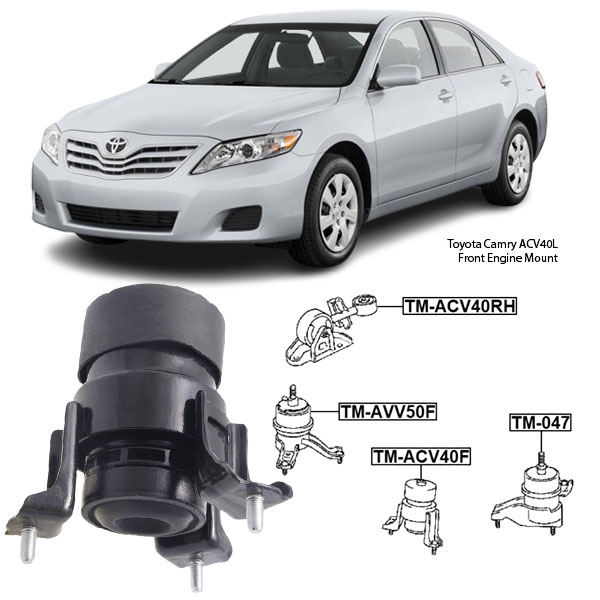
Get Toyota Camry ACV40L Front Engine Mount TM-ACV40F in Kenya
The Front Engine Mount is a crucial component in your vehicle’s engine and transmission system. It plays a key role in securing the engine, absorbing vibrations, and ensuring smooth vehicle operation. Without a properly functioning engine mount, your car can experience excessive engine movement, vibrations, and potential damage to other components.
What is a Front Engine Mount?
A Front Engine Mount is a component that secures the engine to the vehicle’s chassis while absorbing vibrations and movement caused by the engine’s operation. It is typically located at the front of the engine, near the radiator or cross-member, depending on the vehicle’s design.
Main Functions of a Front Engine Mount
Secures the Engine: Prevents excessive movement or shifting
Absorbs Vibrations: Reduces engine vibrations felt inside the cabin
Supports Load & Weight: Helps distribute the engine’s weight evenly
Prevents Damage: Protects engine and transmission components from excessive motion
Enhances Driving Comfort: Ensures a smooth and quiet ride
A well-functioning engine mount contributes to stability, noise reduction, and prolonged engine life.
How Does a Front Engine Mount Work?
The front engine mount is designed to hold the engine in place while absorbing torque and vibrations generated by the engine.
Metal Frame: Provides structural support and attachment points
Rubber or Polyurethane Bushing: Dampens vibrations and absorbs shock
Hydraulic Fluid (in hydraulic mounts): Further reduces vibrations and movement
When the engine is running, it generates rotational forces and vibrations. The engine mount absorbs these forces, preventing them from transferring to the chassis and passenger cabin.
Types of Front Engine Mounts
There are different types of front engine mounts, each designed for specific performance needs.
Rubber Engine Mounts
Most common type
Made of rubber to absorb vibrations
Affordable and durable
Ideal for standard passenger vehicles
Hydraulic Engine Mounts
Contains hydraulic fluid inside the rubber mount
Reduces vibrations more effectively than standard rubber mounts
Used in luxury and high-performance vehicles
More expensive but provides superior comfort
Polyurethane Engine Mounts
Made of stiffer polyurethane material
Offers better durability and performance
Ideal for high-performance and modified vehicles
Can transmit more vibrations compared to rubber mounts
Active Engine Mounts
Electronically controlled to adapt to engine vibrations
Uses sensors to adjust damping dynamically
Found in modern vehicles with adaptive suspension systems
More expensive but provides optimal ride comfort
The right type of engine mount depends on your vehicle type and driving needs.
Signs Your Front Engine Mount Needs Replacement
A failing front engine mount can lead to excessive vibrations, clunking noises, and misalignment issues. Here are the key warning signs:
Excessive Engine Vibrations: Increased vibrations inside the cabin and steering wheel
Engine Movement or Rocking: Engine tilts or shifts more than usual under acceleration or braking
Loud Clunking or Banging Noises: Noises when shifting gears or accelerating
Visible Wear or Damage: Cracks in the rubber, fluid leaks (from hydraulic mounts)
Misaligned Belts or Hoses: Engine movement can cause misalignment of accessories
Rough Idling: Unstable engine behavior while the car is stationary
If you notice any of these symptoms, it’s time to inspect and replace your front engine mount.
How Often Should You Replace Your Front Engine Mount?
Recommended Replacement Interval:
80,000 – 150,000 km (50,000 – 90,000 miles) under normal conditions
Earlier replacement if exposed to rough driving, heavy loads, or aggressive acceleration
Factors Affecting Lifespan:
Driving Conditions: Rough roads and frequent stop-and-go driving reduce lifespan
Engine Torque & Performance: High-performance engines put more stress on mounts
Weather & Temperature Changes: Extreme heat and cold can wear out rubber mounts faster
How to Replace a Front Engine Mount?
Replacing a front engine mount requires mechanical skills and proper tools.
Tools Needed:
Jack & jack stands
Socket & wrench set
Torque wrench
Pry bar & rubber mallet
New front engine mount
Step-by-Step Process:
Lift the Car & Secure the Engine – Use a jack to support the engine weight
Locate & Remove the Old Engine Mount – Unbolt it from the chassis and engine
Inspect for Additional Wear & Tear – Check surrounding components for damage
Install the New Engine Mount – Align it correctly and tighten bolts to specifications
Lower the Engine & Reassemble Components
Test Drive & Check for Vibrations – Ensure proper function
Caution: Incorrect installation can lead to engine misalignment, excessive vibrations, or damage to other components.
Maintenance Tips for Longer Engine Mount Life
Avoid Harsh Acceleration & Braking – Reduces stress on the mounts
Inspect for Leaks & Cracks Regularly – Spot issues early
Keep Engine Components Tight & Secure – Prevents excessive movement
Use Quality Engine Mounts – Cheap mounts can fail prematurely
Replace in Pairs (if needed) – Ensures balanced engine support
A well-maintained engine mount ensures a smooth, vibration-free driving experience.
Follow us on Facebook for more parts.



 Account
 Categories
 Car filter
 Search
 Top
Top