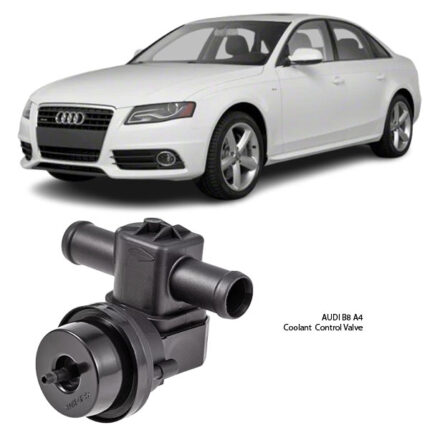


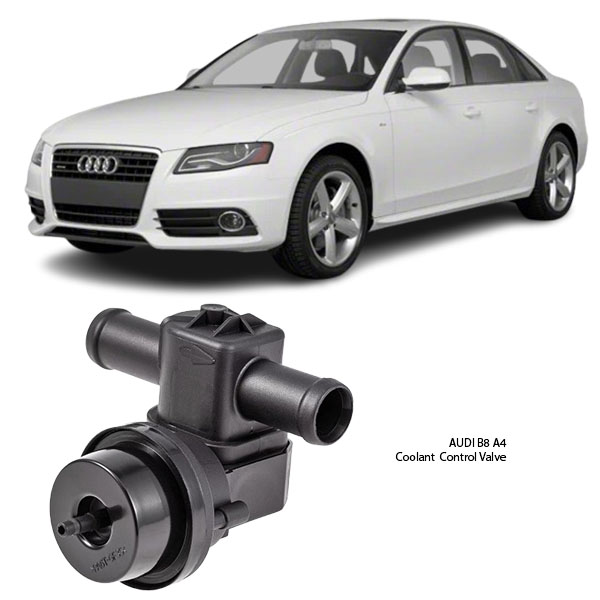

Get AUDI B8 A4 Coolant Control Valve 1J0819809 in Kenya
In every efficient mechanical system, there’s a careful balance between power and temperature. Heat is a natural byproduct of energy and motion, and unless it’s managed, it becomes a threat to performance and longevity. That’s where the Coolant Control Valve comes in—a precise, often underestimated component that plays a starring role in temperature regulation.
It doesn’t make noise.
It doesn’t flash or blink.
But it’s always working—directing, controlling, and responding to keep things in perfect thermal harmony. 🎯🌬️
Let’s unpack how this critical part operates, what it’s made to do, signs it may be failing, and how to keep it in peak form.
🧠 What Is the Coolant Control Valve?
The Coolant Control Valve is a thermal management component that controls the flow of coolant—a heat-absorbing liquid that circulates within a system to maintain stable temperatures.
This valve acts as a gatekeeper, opening or closing flow paths depending on:
-
Engine load
-
Operating temperature
-
Climate conditions
-
HVAC system demands (when integrated)
In systems with advanced thermal needs, this valve plays an even bigger role—regulating zones, supporting rapid warm-up, optimizing fuel efficiency, and ensuring consistent performance under all conditions.
⚙️ How Does It Work?
Here’s how this smart little component does its job:
-
Sensors read the temperature of various zones (like the engine or heater core).
-
The system’s control module sends a signal to the valve.
-
The Coolant Control Valve opens, closes, or partially adjusts to direct coolant flow where it’s needed.
-
As coolant flows through specific channels, it absorbs heat, and then gets redirected to cooling areas like the radiator or heater exchanger.
-
The process repeats—constantly adjusting to maintain ideal conditions.
Some valves are electronically controlled, using stepper motors or solenoids. Others rely on vacuum control or temperature-reactive materials like wax pellets that expand and contract. 🚿⚙️
🥶🌡️ Why Is This Valve So Important?
Think of the Coolant Control Valve as the thermostat of precision performance. It ensures that components don’t run too hot or too cold by regulating how much coolant goes where, and when.
Without this control:
-
Warm-up times are slow
-
Efficiency drops
-
Fuel consumption increases
-
Overheating becomes a real risk
-
Comfort systems (like the heater) become unreliable
With it? You get: ✅ Faster warm-up during cold starts
✅ Consistent operating temperature
✅ Optimized fuel economy
✅ Protection from overheating
✅ Enhanced HVAC control
✅ Longer life for seals, sensors, and gaskets
It’s smart cooling in motion. 💧🧠
🧩 Where Is It Found?
The Coolant Control Valve is typically installed along the coolant hoses or inlet/outlet passages of a system that requires temperature regulation. It could control:
-
Coolant flow to or from the radiator
-
Circulation through a heater core
-
Redirection of coolant through bypass loops during warm-up
-
Flow separation for hybrid battery cooling or turbo cooling in advanced systems
Its location is strategic—positioned right where coolant paths split or converge for optimal management. 🎛️
🔍 Symptoms of a Failing Coolant Control Valve
Like any mechanical or electrical part, the Coolant Control Valve is subject to wear, contamination, and failure. Here’s how you can tell something’s off:
⚠️ Inconsistent cabin heat – One moment it’s warm, the next it’s cold
⚠️ Slow warm-up – System takes too long to reach operating temperature
⚠️ Overheating – Especially under load or in stop-and-go situations
⚠️ Coolant leaks – Around the valve housing or connectors
⚠️ Check engine light or fault codes – Especially on electronically controlled valves
⚠️ Heater blowing cold air even when fully warmed up
In many cases, the issue starts subtly and worsens over time—leading to bigger problems if ignored. 🧯
🛠️ Causes of Coolant Control Valve Failure
There are several reasons a coolant control valve might stop doing its job effectively:
🌫️ Debris or sediment in the coolant can clog or jam the valve
🔌 Electronic failure of the actuator or solenoid
🧊 Thermal fatigue from repeated heating and cooling cycles
🧪 Chemical degradation of rubber seals or plastics from poor coolant quality
🔧 Mechanical wear from vibration or prolonged use
🌬️ Vacuum leaks in vacuum-operated systems
Most issues are preventable through proper maintenance and early detection. 🧰
🔄 Replacing or Servicing the Valve
Depending on the type and system setup, servicing or replacing a coolant control valve can range from a simple hose-side swap to a more complex electronic module replacement. Here’s the basic process:
-
Coolant is drained or partially removed
-
Valve location is accessed by removing covers or hoses
-
The faulty valve is disconnected and removed
-
A new valve (OEM or high-quality replacement) is installed
-
Connections are sealed and tightened properly
-
Coolant is refilled and system is bled of air
-
The system is tested for flow and temperature balance
Done right, this restores your thermal management system to factory performance. 🔧💯
💡 Tips for Longevity & Maintenance
✅ Flush coolant system regularly – Prevent buildup of sludge or particles
✅ Use only recommended coolant types – Mixing coolants can damage valve internals
✅ Inspect hoses and connectors during service
✅ Scan for fault codes if HVAC or heat performance drops
✅ Address temperature issues early – Don’t wait for overheating
Like most parts, the coolant control valve loves clean fluid, stable pressure, and timely inspections. 🧼🔍
🔬 Coolant Control Valve vs Thermostat: What’s the Difference?
While they seem similar, here’s how they differ:
🧊 Thermostat – Opens or closes based on coolant temperature to allow flow to the radiator
🔁 Coolant Control Valve – Directs or blocks flow to specific areas of the system, often controlled electronically
Think of the thermostat as the “doorman” and the control valve as the “air traffic controller.” Both are essential—but for different zones of responsibility.
🧠 Final Thoughts: The Cool Boss of Cool
The Coolant Control Valve might be behind the scenes, but its impact is massive. It ensures everything stays cool (but not too cool), manages thermal balance across the board, and quietly protects one of the most valuable things in any machine: consistency.
It may be small.
It may be quiet.
But it’s one of the smartest investments in performance, protection, and peace of mind. 🌡️🔧💧
So when temperatures matter — and they always do — make sure your coolant control valve is doing its job.
Because when it works well, everything else flows perfectly.
Follow us on Facebook for more parts.